
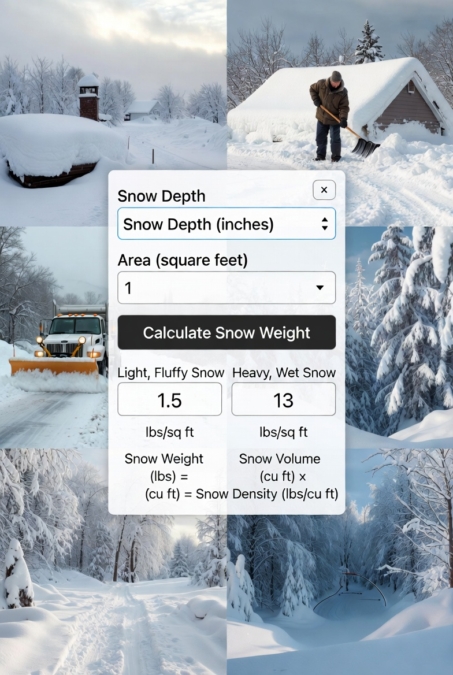
The winter weather not only provides the beautiful snow scenes but presents more logical aspects like determining the weight of snow on the roof, calculating the weight of snow equivalent, and strategizing on the accumulation. The Snow Calculator is a specialized online tool that helps users determine the density, weight, and impact of snow based on its depth, area, and type.
In contrast to general weather applications that operate based on the forecasts, this calculator can perform accurate, mathematically focused, conversions in the actual application sense, whether to ensure that a homeowner does not damage the roof or to estimate the amount of demolition a contractor will require.
Snow is very different in weight: fresh and fluffy snow weighs much less per cubic foot than wet and heavy snow. Such differences are essential to learn about to be safe and efficient when there is snowfall. A snow calculator requires the user to enter a few details into a snow calculator such as depth of the snow in inches, area covered (roof or driveway), and Snow Calculator estimates snowfall amounts based on weather data, helping you predict snow accumulation accurately and plan ahead.
(light, medium, or heavy) in order to calculate the amount in pounds or kilogram of snow. This is to avoid structural problems, overloading of snow can overstretch a building particularly one that is old.
These tools are based on existing meteorological and engineering data, and frequently use guidelines of National Weather Service or standard ranges of snow density. They enable users to make sound decisions instantly without the need to use sophisticated manual calculations, and so the problems of winter are reduced to just a challenge to handle.
How a Snow Calculator Works
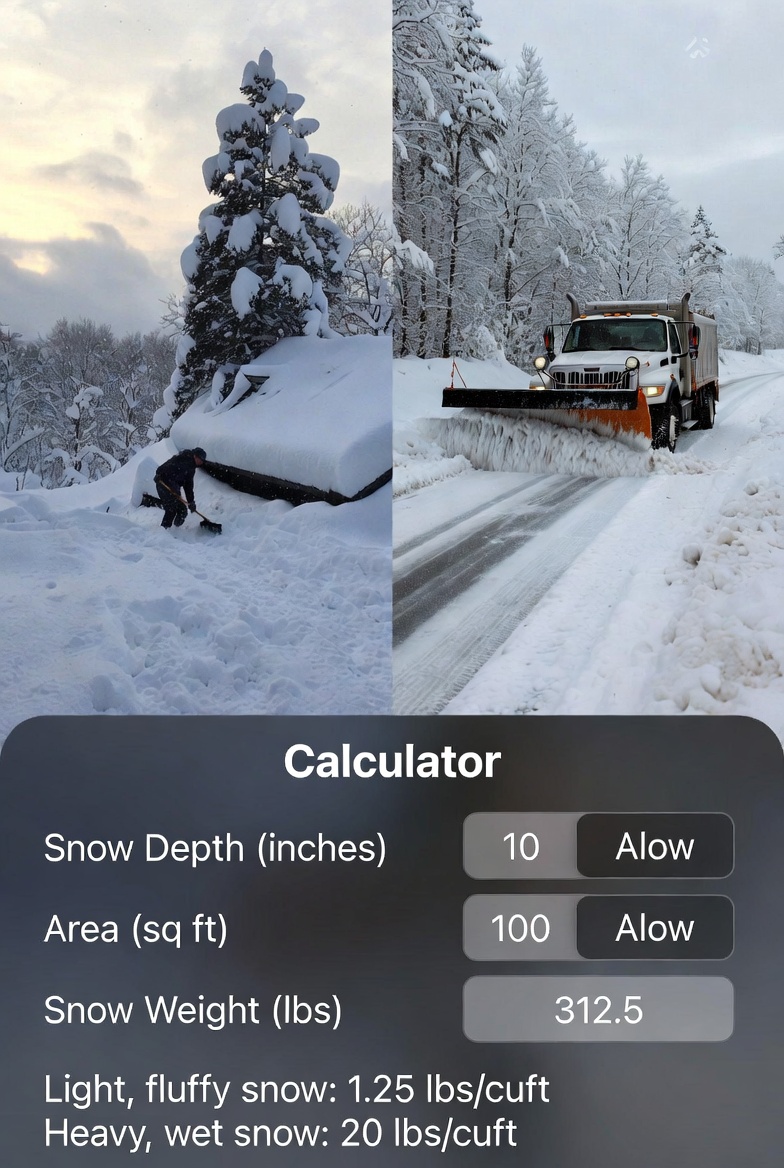
The basic principle of a snow calculator is based on a very basic but effective equation: weight=volumexdensity. Volume equals area × depth, and snow density depends on snow conditions—fresh powder usually weighs 5–10 pounds per cubic foot, while wet, compacted snow can weigh 20–30 pounds or more per cubic foot.
Users enter key variables such as the surface size (for example, roof area in square feet), the amount of snowfall (actual or predicted), and the temperature or snow type to get a more precise estimate.
It is then a tool that gives the estimated weight, which may include safety factors (including the maximum load on the roof) and conversion possibilities such as the calculation of rain-to-snow equivalents in mixed precipitation forecasting.
More sophisticated ones can include some extra specification such as elevation, that can determine the fluffiness of the snow, or historical averages to plan better. This renders the calculator essential to instant evaluation as well as future planning.
Applications in Practice of Snow Calculators.
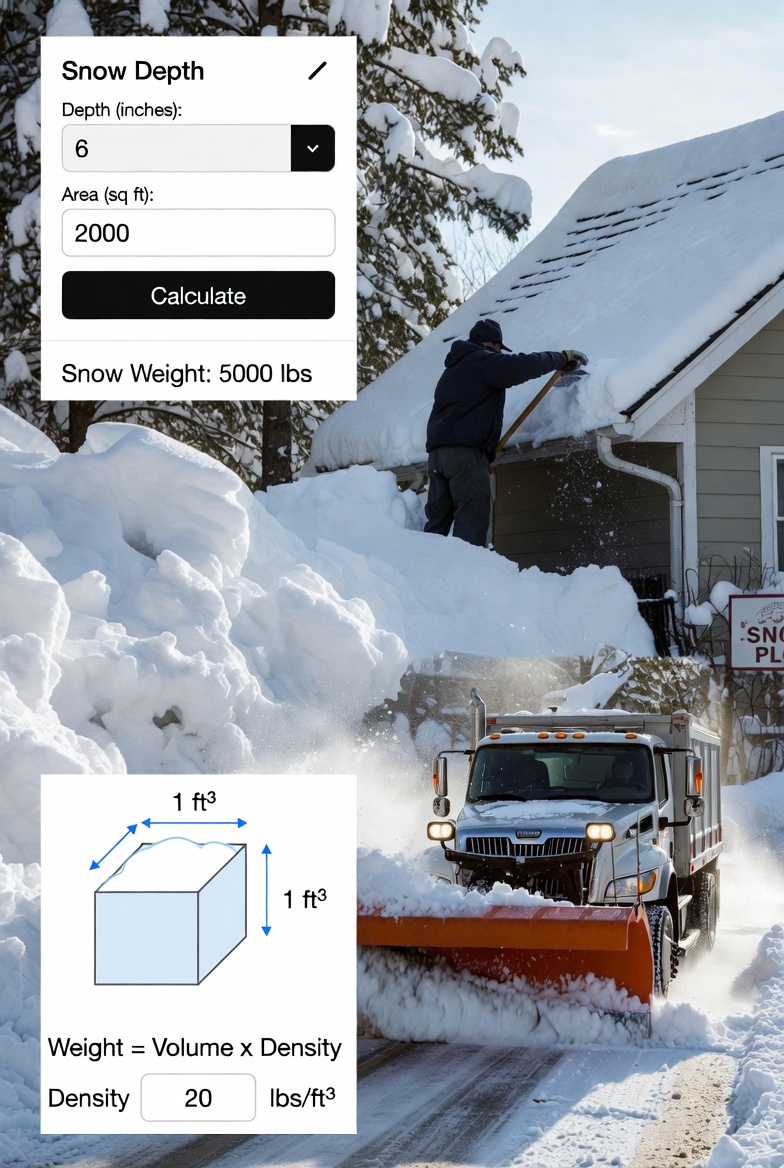
Snow calculators are the tool that allows homeowners to track the safety of their roofs in times of heavy storms, as timely shoveling or the employment of a professional is the only way to avoid the expensive collapse. In snowy areas where blizzards occur frequently, these tools help people decide when to clear snow as it accumulates and becomes heavier.
Municipalities and contractors use them to budget on snow plowing, salt distribution or equipment requirements. Outdoor users could indirectly determine conditions of the trail or avalanches hazards by the accumulation data.
In fun applications, there are calculators which use the amount of rainfall to estimate the depth of snow, to predict or compare snowfall in years, or to predict a white Christmas possibility.
What is the need to select a special Snow Calculator?
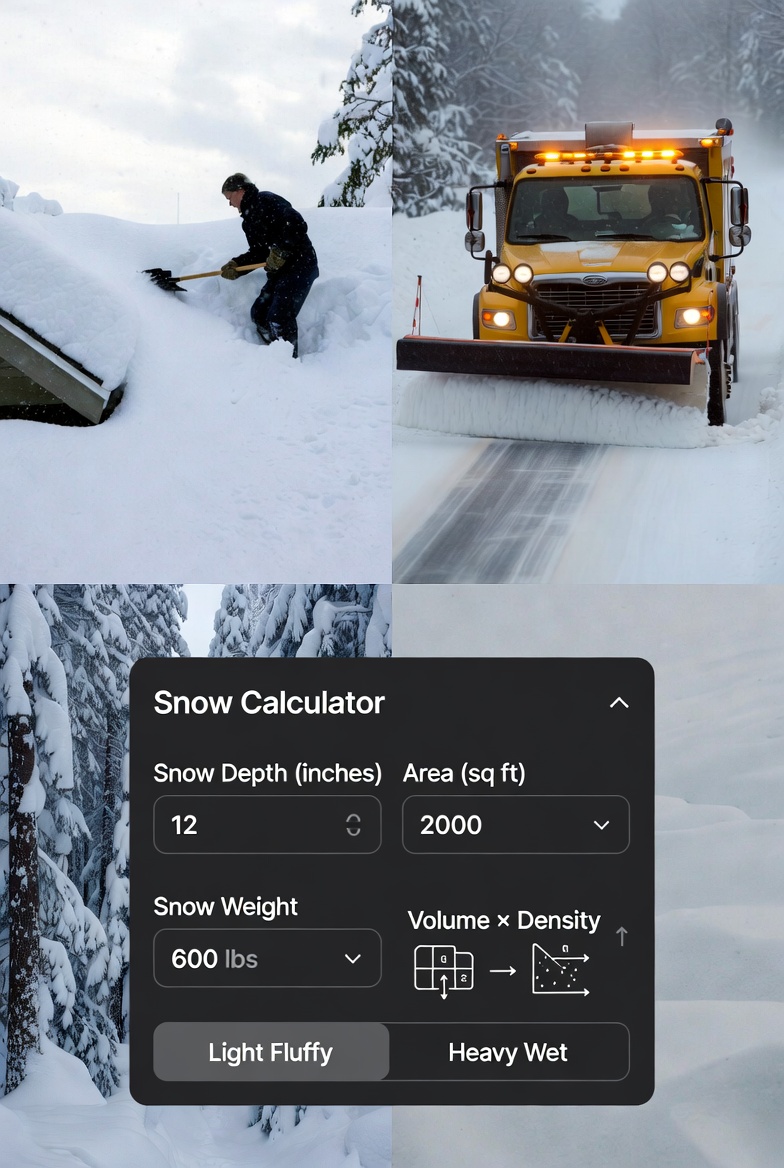
Although the weather websites give the snow fall predictions, they seldom give the weight or load calculations. A more practical solution is a specific snow-computer that provides user-friendly and precise results that are more focused on practical requirements. It is free, available on any equipment, and would not need any specialized expertise, just fundamental measurements.
As winter climate patterns change, these tools remain reliable because they update continuously with new data trends. When the snow changes the regular conditions, they increase safety, efficiency and peace of mind.
Conclusion
The snow calculator is one of the simplest but effective tools that one can obtain when they are to work with the white cover of winter. It links meteorology and engineering to guide users on the actual effects of snow other than the beauty of the snow. The next time associated with the falling of flakes, reach this tool not only to see the picturesque view, but also to be safe and ready.