
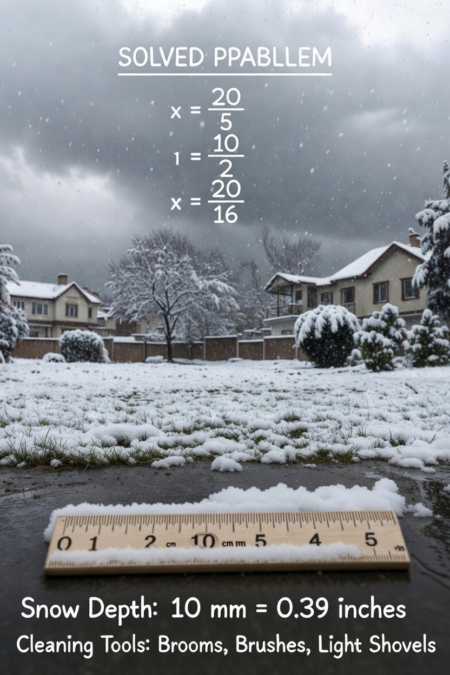
Speaking about snowfall and snow calculators at the Internet, correct unit conversions are the main clue to the appropriate analysis and interpretation of the data. The majority of weather reports in most areas of the world display the precipitation in millimeters. Most of the users who are mostly in the United States prefer the precipitation in inches. This difference makes it especially important to convert 10mm to Inches to be able to interpret snow predictions.
Any individual should know how to convert millimeters to inches after winter storms, snowfall, or when reading day-to-day weather reports to avoid confusion. A calculator would be of great assistance when the users of the snow calculator are able to clearly discern the values of the measurements. Even in minimal amounts, snow can have an impact on the travelling, safety and day-to-day planning.
This guide explains how to convert 10mm to inches and why this conversion is necessary. How can this conversion can help users understand better forecasts of snowfalls with the help of a snow calculator?
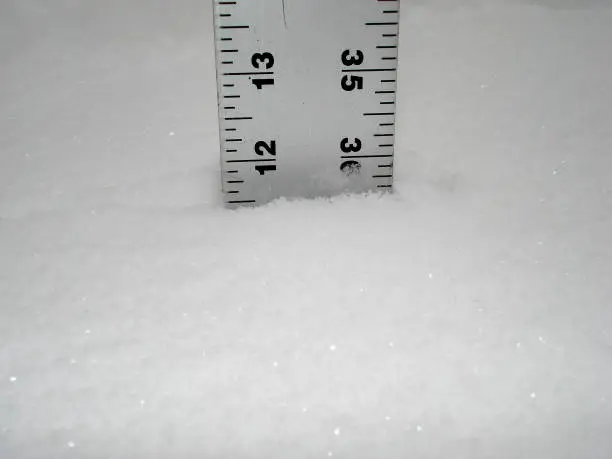
Millimeters and Inches
Weather forecasters around the world measure the scale in the metric system using millimeters (mm). The imperial system of measurement also has inches (in) which are commonly available in the United States and other regions. Snow calculators frequently use both units because they tend to consolidate information.
Without it, the quantity of snowfalls is difficult to compare or even to understand what the real impact of a forecast is. This is the reason snow calculators are likely to have an automatic conversion option. That a user will be able to view the results in his preferred unit.
How to Divide Millimeters into Inches.
The conventional conversion equation is easy and dependable:
1 millimeter = 0.03937 inches
Using this formula anyone can have the ability of knowing the number of inches of any millimeter correctly. It can be very useful especially when dealing with values such as snow accumulation that involve 10mm, which is very characteristic of winter weather forecasts.
How to Convert 10mm to Inches
To convert 10mm to inches, the formula below should be used:
10mm × 0.03937 = 0.3937 inches
Rounded off 10mm is approximately 0.39 inches.
Such a transformation suggests that 10mm fall of snow is light. It does not cause major inconveniences but it may still have effects on the situation on the roads especially where the temperature is lower than zero.
What 10mm of Snow Means in Real Life
Being aware of the true scale of the snow based on the 10mm of forecast that the forecast data will bring can bring the users closer to the forecast data.
Light Snow Accumulation
The amount of light snowfall that is normally considered light is the 10mm (0.39 inches). It may be that it is over roads, sidewalks, and cars, but is not usually massive snow removal.

Travel Considerations
Although light snow of 10mm deep may make surfaces slippery especially during the early mornings, or during the night. The pedestrians and drivers will be put on the alert.

Weather Pattern Indicators
In the majority of cases, 10mm of the preformed snow could mark the beginning of a larger winter storm. Conditions variations can be tracked with the assistance of a snow calculator

The Snow Calculator: Accuracy with a Snow Calculator.
A snow calculator enables its users to estimate the depth, timing and affect of the snowfall basing on parameters like:
- Air temperature
- Precipitation rate
- Snow-to-liquid ratio
- Wind speed
Converting values such as 10mm into inches ensures that people using the calculator receive accurate, easy-to-understand results. This is especially useful for users who are accustomed to measurements in inches, as it helps them plan travel or school schedules.
The significance of Accurate Conversions.
Any slight error in measurements may result in misinterpretations in the predictions of snowfall. The fact that 10mm is equal to 0.39 inches enables users to interpret forecasts properly and make preparations. Precise conversions make travel choices, improve scheduling, and winter preparedness.
Conclusion
The conversion of 10mm to inches is an easy but worthwhile exercise to those who are to use snow calculator or even to those who monitor weather news during winter. At 10mm that is about 0.39 inches, users can have a better idea of the snowfall effect and prediction accuracy. Appropriate conversions ensure the snow calculators are reliable and help the people stay updated in the winter season.